


The Blind Spot In Your Privacy Detection
IPinfo’s residential proxy detection flags traffic routed through real ISP-assigned IPs — the evasive proxies that bypass standard VPN and proxy detection entirely. It’s a separate dataset purpose-built to catch them.


Comprehensive Residential Proxy Data
Identify one of the most evasive forms of anonymized IP address with IPinfo’s residential proxy detection. Used to mask large-scale attacks and account takeovers, residential proxies mimic real users and evade traditional detection. We surface clear signals on whether an IP is associated with a residential proxy provider.
Flexible Access Options
Reliable IP Intelligence
Built for Developers
Built for rapid, accurate development
Query it live through the API, or download a database sample and contact sales for full access.
Fast and Easy API Access
Gain access to our best-in-class data. Setup takes just a few minutes.
 50-200 ms response time on average
- 99.999% uptime
- Data updates every 24 hours
Database Download Sample
Choose a formatDownload CSV sampleGet the Full Database
Like what you see in the sample above? Contact sales for full dataset access — custom data coverage, premium support, and seamless migration.
- Customizable fields
- Data updates every 24 hours
How People Use Residential Proxy Detection Data
Residential proxy detection powers everything from fraud prevention to traffic quality analysis. By identifying IPs routed through residential proxy networks, teams can make faster, more informed decisions about risk, user trust, and traffic integrity. Here’s how top companies put IPinfo’s residential proxy detection data to work:
Fraud Prevention
Traffic Quality Verification
Threat Intelligence
Made for Developers, Trusted by Enterprises
Our expert in-house team diligently maintains and supports our Residential Proxy Detection, ensuring you always have accurate, up-to-date IP data at your fingertips. With libraries for more than a dozen popular programming languages—from Ruby to Rust and PHP to Perl—integrating our API is quick and seamless. Explore our developer docs to see just how easy it is to get started.


We love to integrate with the IPinfo API because it provides us with a highly reliable and accurate stream of data.

Because our whole system is built around those principles of identification and attribution, we can’t use public information via RIR or other providers. Developing this caliber of data takes a lot of thought and intentional improvement. It’s really quite difficult. There’s a lot of value in having IP data delivered as a service.

Our customers are trying to understand when accounts are performing suspicious activities. They need to determine if the user identity is who they’re claiming to be. IP address data is a really good indication of that.
Rated #1 for IP Data Accuracy


Further Reading
View all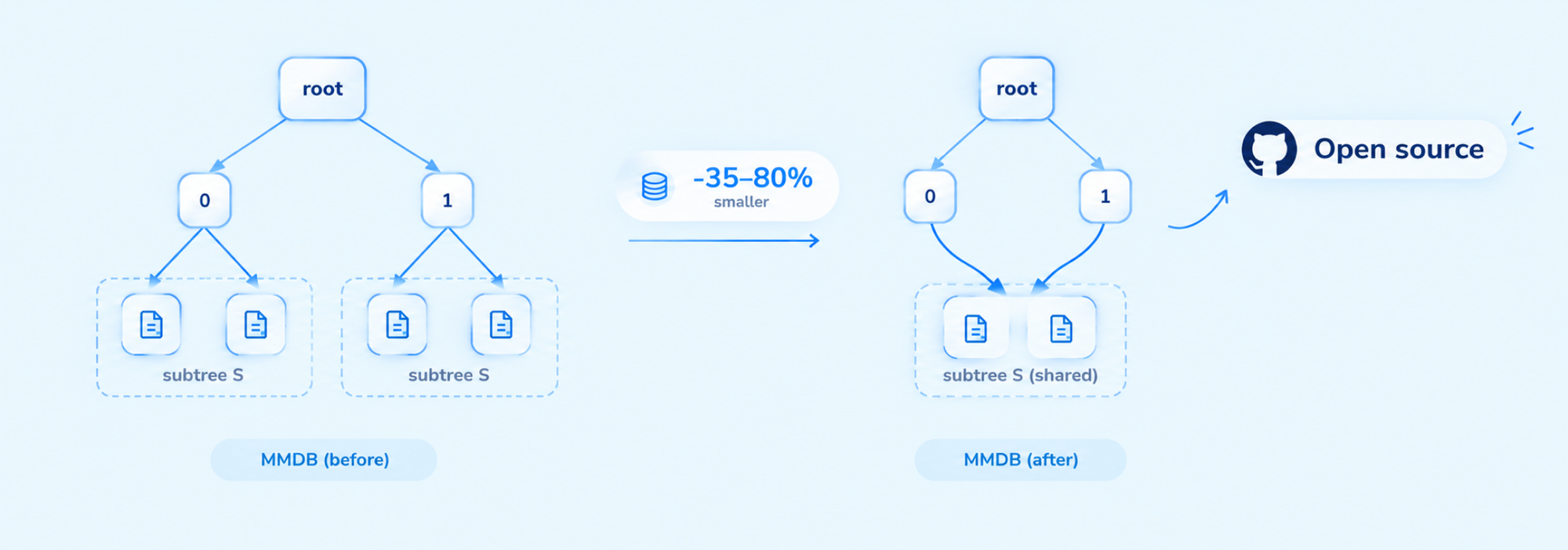
How We Made Our MMDB Files a Third Smaller Without Changing a Byte of Data

Bad Traffic Brought Visitors to Our DMEXCO Booth, but Good Traffic Kept Them There

How IXP.GT Uses Internet Measurement to Improve Local Connectivity
Frequently asked questions
A residential proxy routes internet traffic through real, ISP-assigned IP addresses belonging to everyday home connections. Because the traffic appears to come from a genuine residential user rather than a datacenter, it blends in with legitimate activity and slips past standard proxy and VPN detection.
VPNs and datacenter proxies route traffic through servers on hosting infrastructure, which is comparatively easy to identify from network ownership data. Residential proxies borrow real ISP-assigned home IPs, so they carry none of the datacenter fingerprints that traditional detection relies on — which is exactly why they need a purpose-built dataset.
Because the IPs are indistinguishable from real users at the network level. They resolve to consumer ISPs, rotate frequently across large pools, and show none of the hosting signals that flag a VPN or datacenter proxy. Catching them requires observing which IPs are actively participating in residential proxy networks over time, not just checking IP ownership.
IPinfo maintains a dedicated residential proxy dataset built from continuous observation of proxy network activity. Each flagged IP includes the proxy `service` it's associated with, a `last_seen` date, and a `percent_days_seen` value indicating how consistently the IP appears in the network — so you can gauge both recency and confidence.
It's the share of days within the observation window that an IP was seen active in a residential proxy network. A higher value signals a persistent proxy node; a lower value suggests occasional or intermittent use. It lets you tune how aggressively you act on a given IP.
It's a separate, purpose-built dataset. Residential proxies are designed to defeat conventional VPN/proxy detection, so IPinfo maintains this as a distinct data product rather than folding it into general privacy detection.
Common uses include fraud prevention (flagging account takeovers and payment fraud masked behind residential IPs), traffic-quality verification (filtering proxy traffic out of ad and engagement analytics), and threat intelligence (surfacing proxy infrastructure used to conceal malicious activity).
It's available via real-time API, database download (CSV, JSON, MMDB, PARQUET), and platform integrations like Snowflake, GCP, and Splunk.